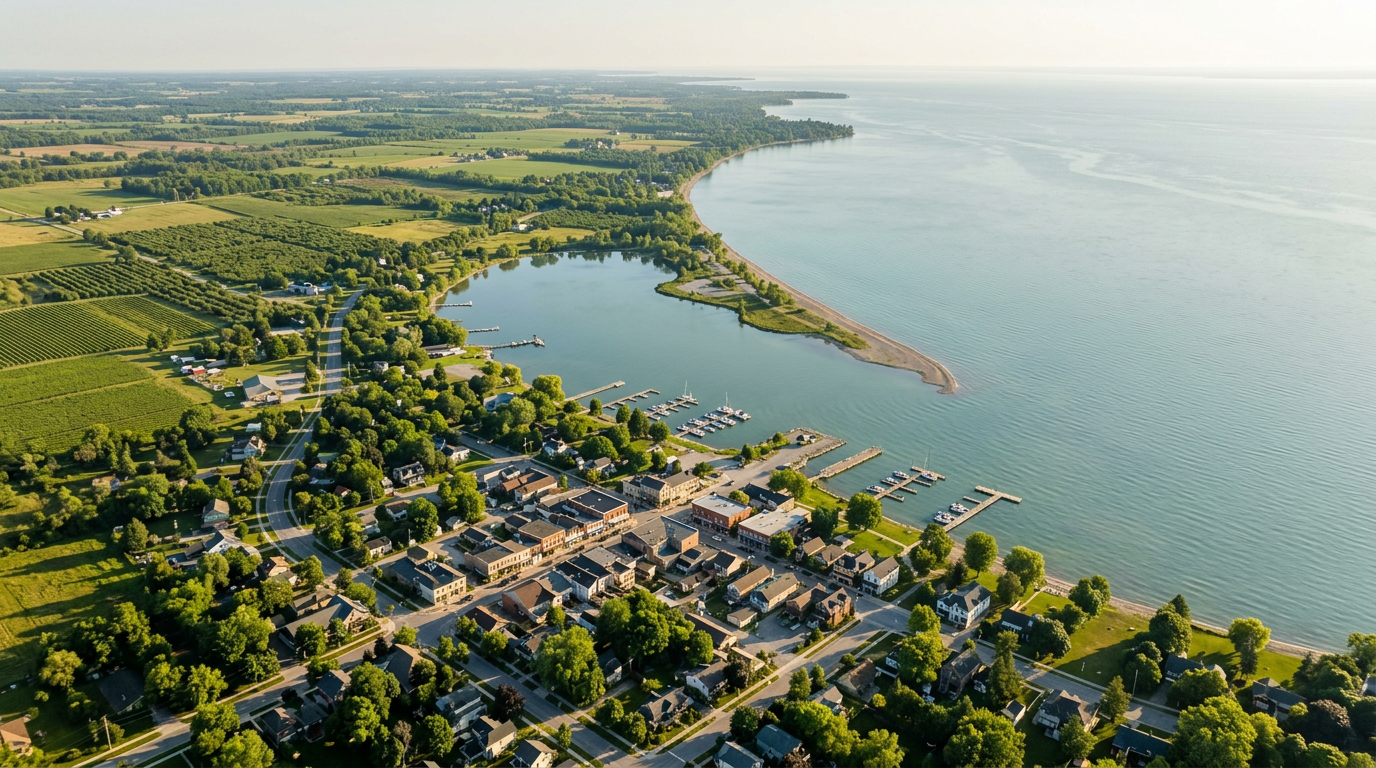
Neighborhoods Carol Love & Joe Martin Serves in Prince Edward County
Carol Love & Joe Martin is a REALTOR® with HARVEY KALLES REAL ESTATE LTD., serving 8 Prince Edward County neighborhoods: Picton, Wellington, Belleville and 5 more.
Picton
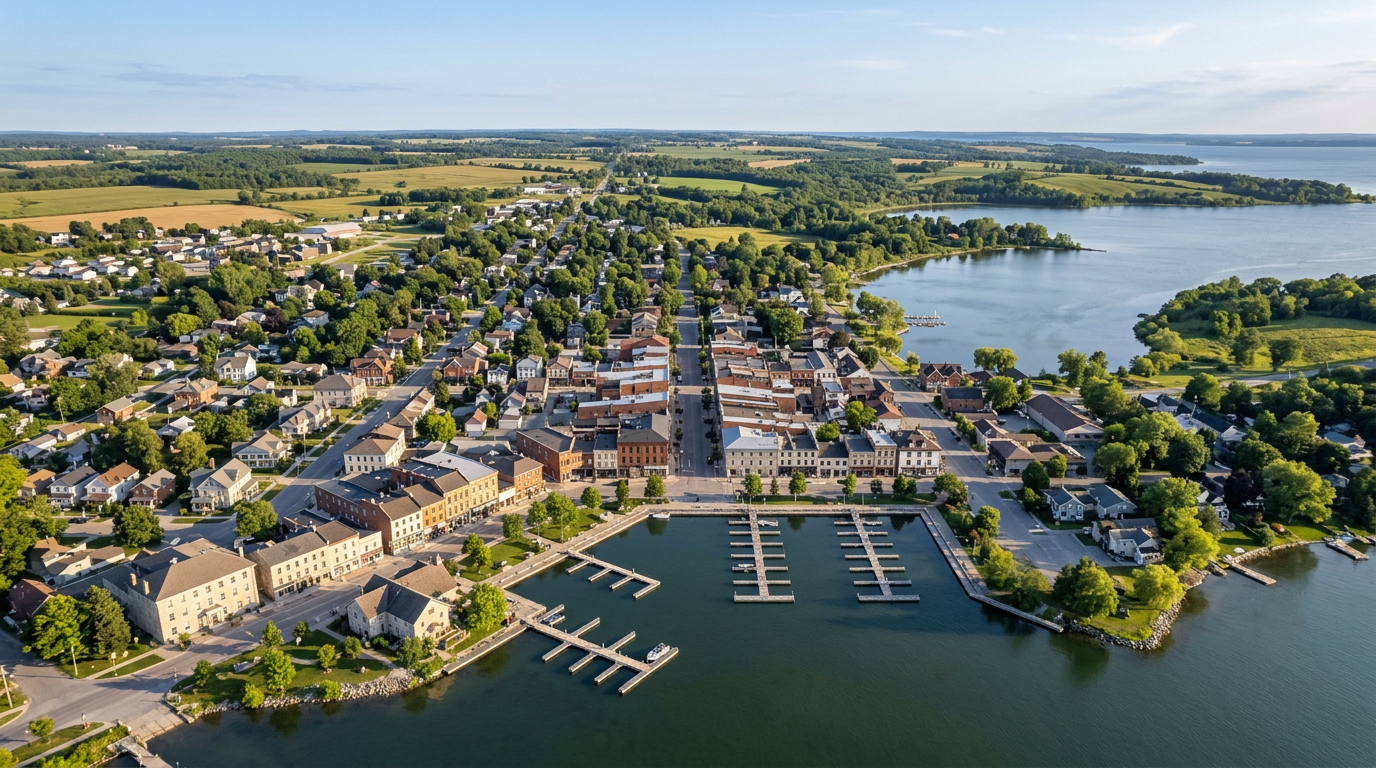
Picton sits on the shores of Picton Bay in Prince Edward County, the island-like peninsula that juts into the northeastern end of Lake Ontario. It stands on its own rather than serving as a bedroom community, though Belleville and the Highway 401 corridor are within reach for errands, appointments, or the occasional commute toward Kingston or the Toronto direction. The surrounding landscape is a patchwork of farmland, vineyards, orchards, and shoreline, with water never far from view.
Belleville
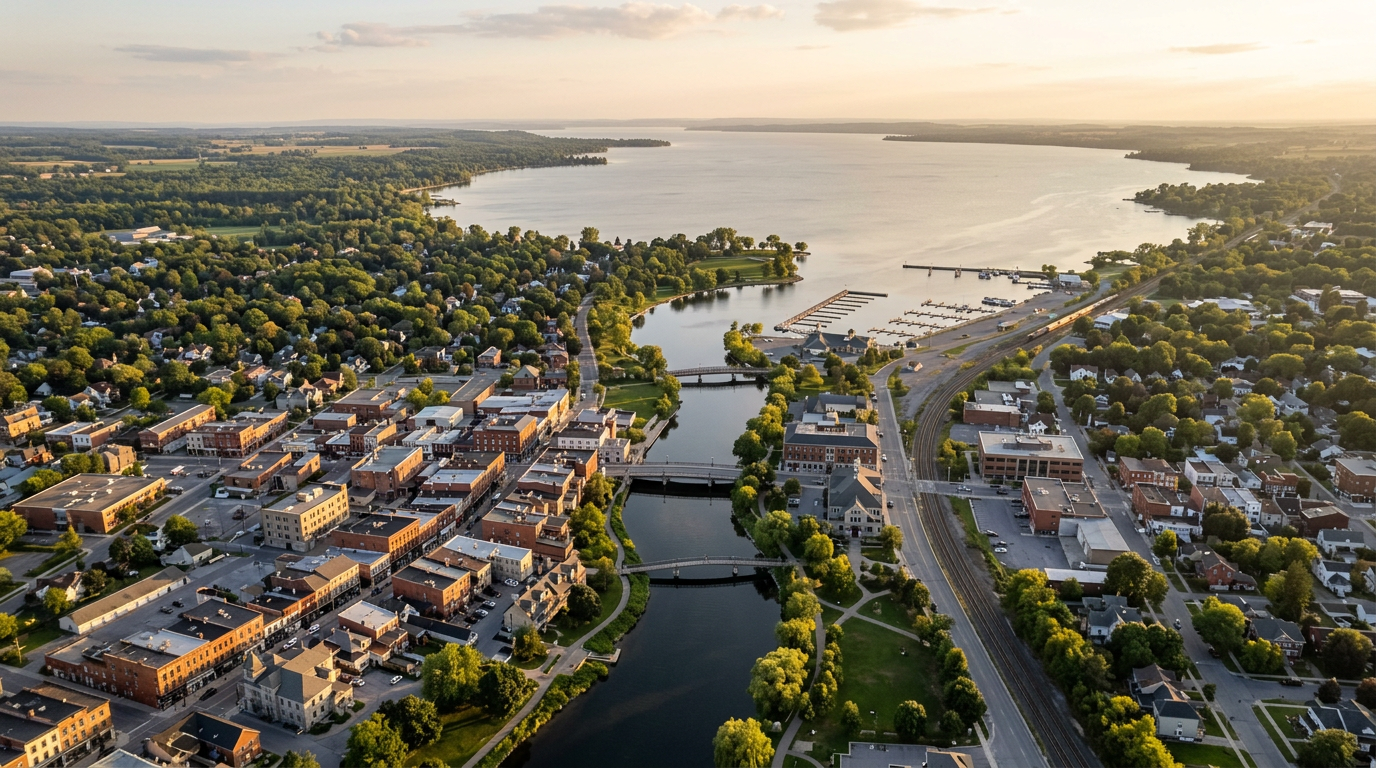
Belleville sits on the north shore of the Bay of Quinte in eastern Ontario, roughly midway between Toronto and Montreal. The Moira River winds through the city to meet the bay, giving Bellevillians waterfront trails, boating, and fishing close to home. Older areas near the downtown core feature brick Victorian and Edwardian homes, while established residential streets offer mid-century bungalows and family-sized two-story houses. Newer subdivisions toward the edges bring contemporary builds, townhomes, and condominiums.
Quinte West
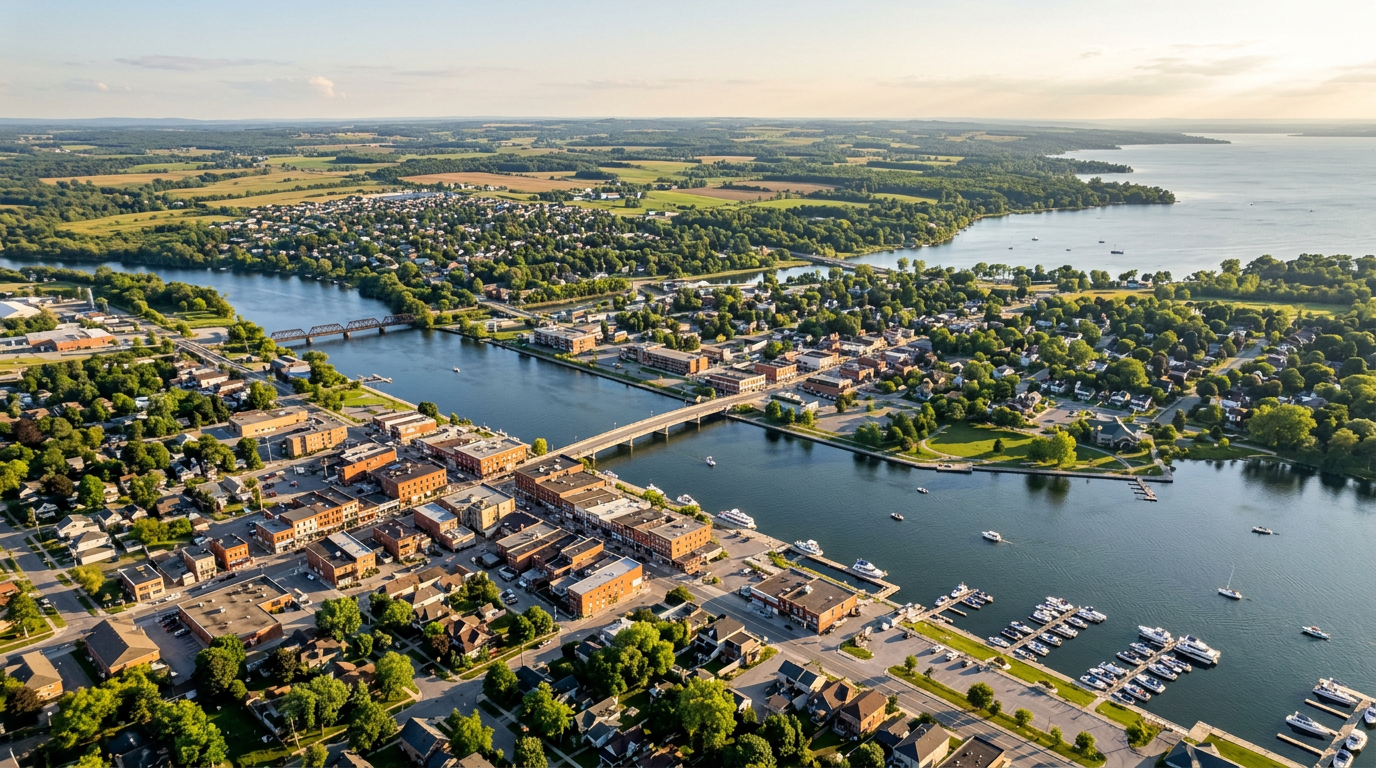
Quinte West sits along the northern shore of the Bay of Quinte in southeastern Ontario, where the Trent River meets Lake Ontario's long, sheltered inlets. The city is a blend of several former communities, and that shows in its layout: Trenton anchors the area with a walkable older core of brick storefronts and early-century homes, while Frankford, Batawa, and Stirling-adjacent rural stretches offer village-scale streets, farmhouses, and larger country properties. Newer subdivisions with modern single-family homes and townhouses add to the mix.
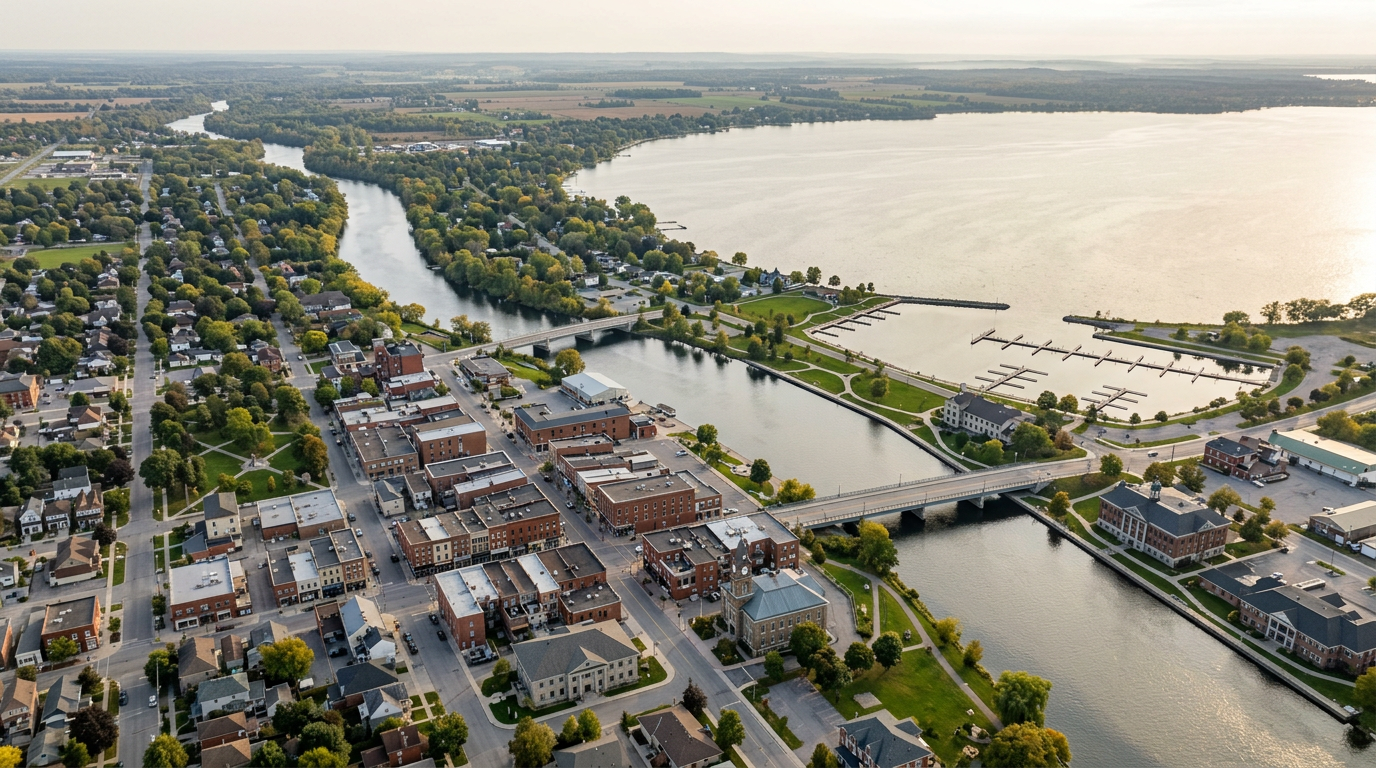
Trenton, Quinte West
Trenton sits at the western edge of Quinte West, Ontario, where the Trent River meets the Bay of Quinte. That waterfront setting shapes much of daily life here, with boating, fishing, and shoreline walks close at hand. The neighborhood is also the western end of the Trent-Severn Waterway, which draws boaters and visitors who appreciate its connection to Ontario's wider water routes.
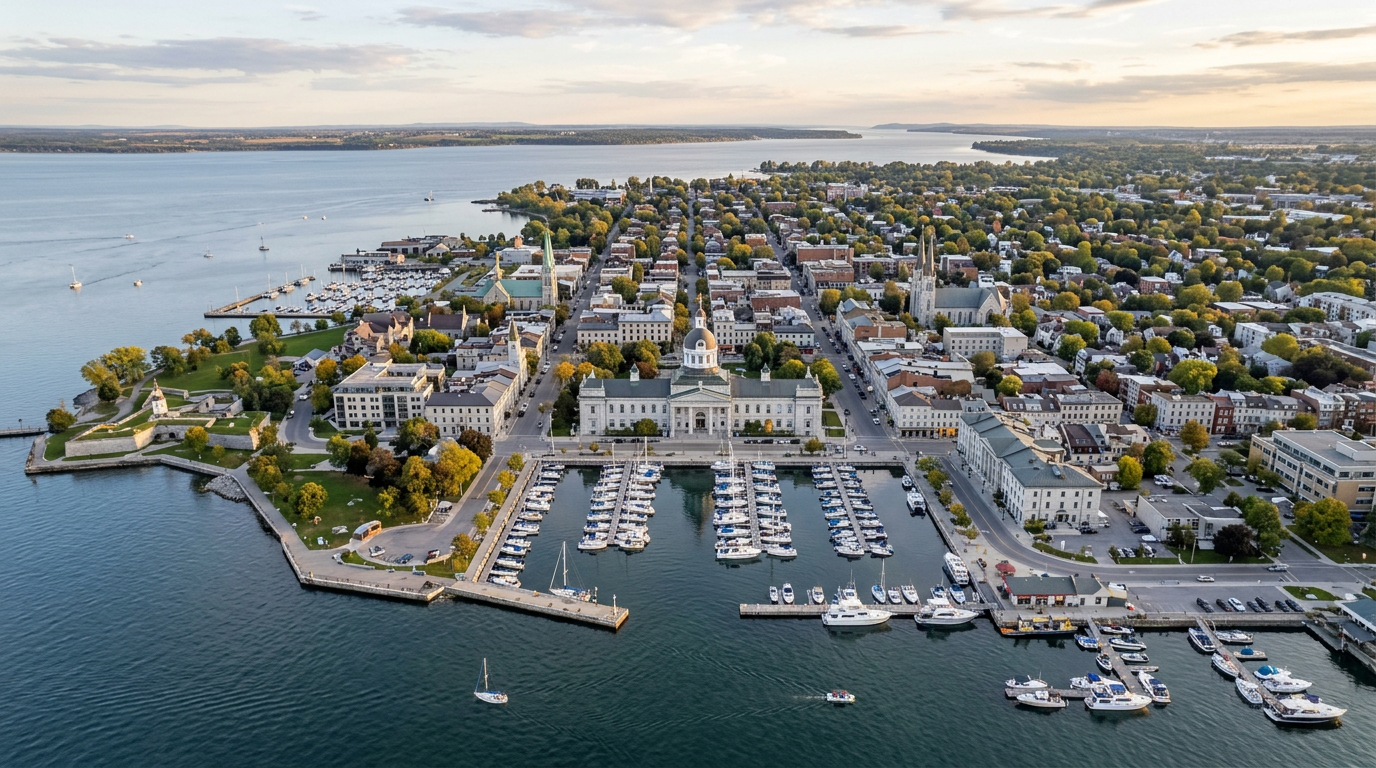
Kingston
Kingston sits where Lake Ontario meets the St. Lawrence River in southeastern Ontario, roughly midway between Toronto and Montreal. The water defines the place, with a long shoreline, harbor views, and islands just offshore that draw sailors, paddlers, and walkers alike. Its limestone buildings give the historic downtown a solid, handsome look, and the streets around it mix heritage homes with converted older properties. Beyond the core, established neighborhoods offer brick and stone houses on mature streets, while newer subdivisions toward the edges provide more contemporary layouts.
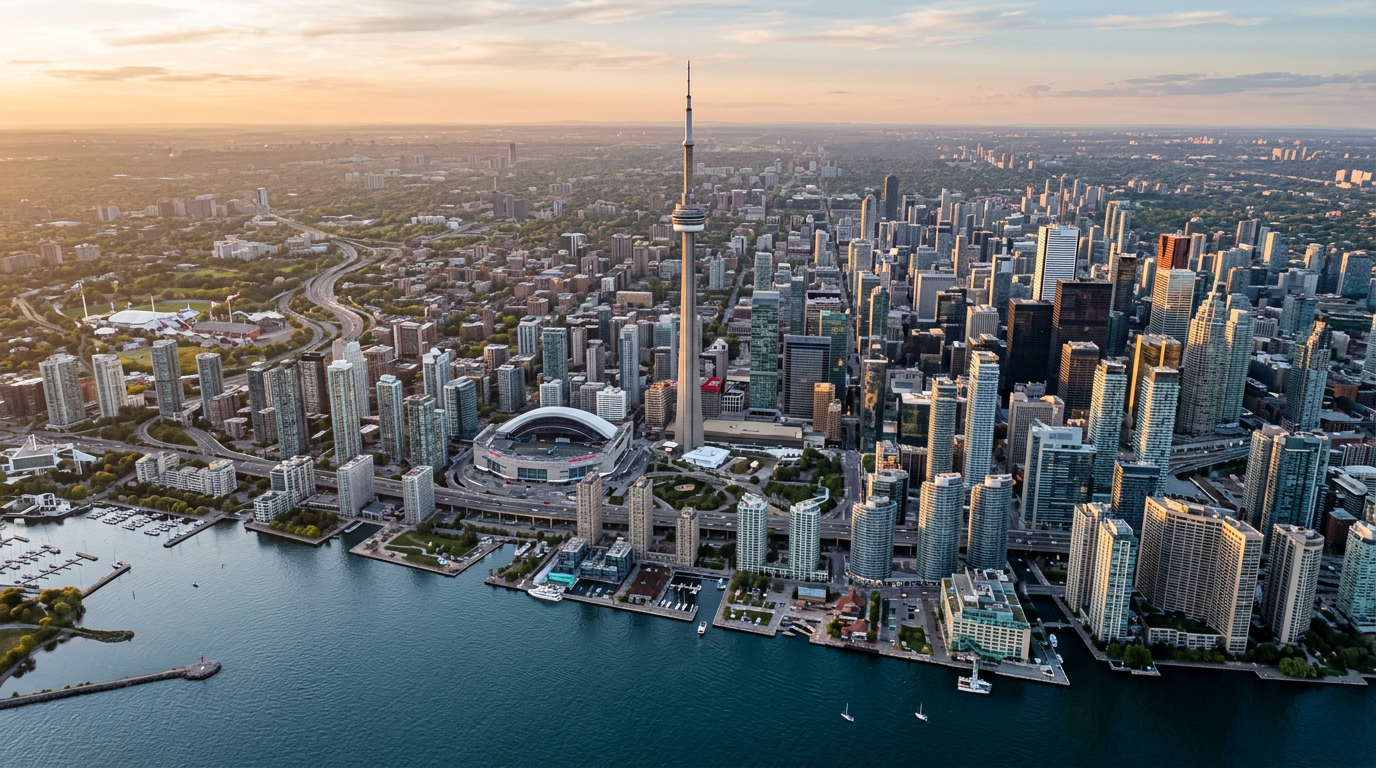
Toronto
Toronto sits on the northwestern shore of Lake Ontario, the largest city in the province and the anchor of southern Ontario's urban region. The waterfront shapes much of daily life, with lakeside trails and parks, while ravines cut green corridors through an otherwise built-up landscape. Housing varies widely from one area to the next: Victorian rowhouses and brick semis fill the older core, leafy established neighborhoods feature larger detached homes, and condo towers rise near downtown and along major transit corridors. Newer suburban developments extend the city outward.
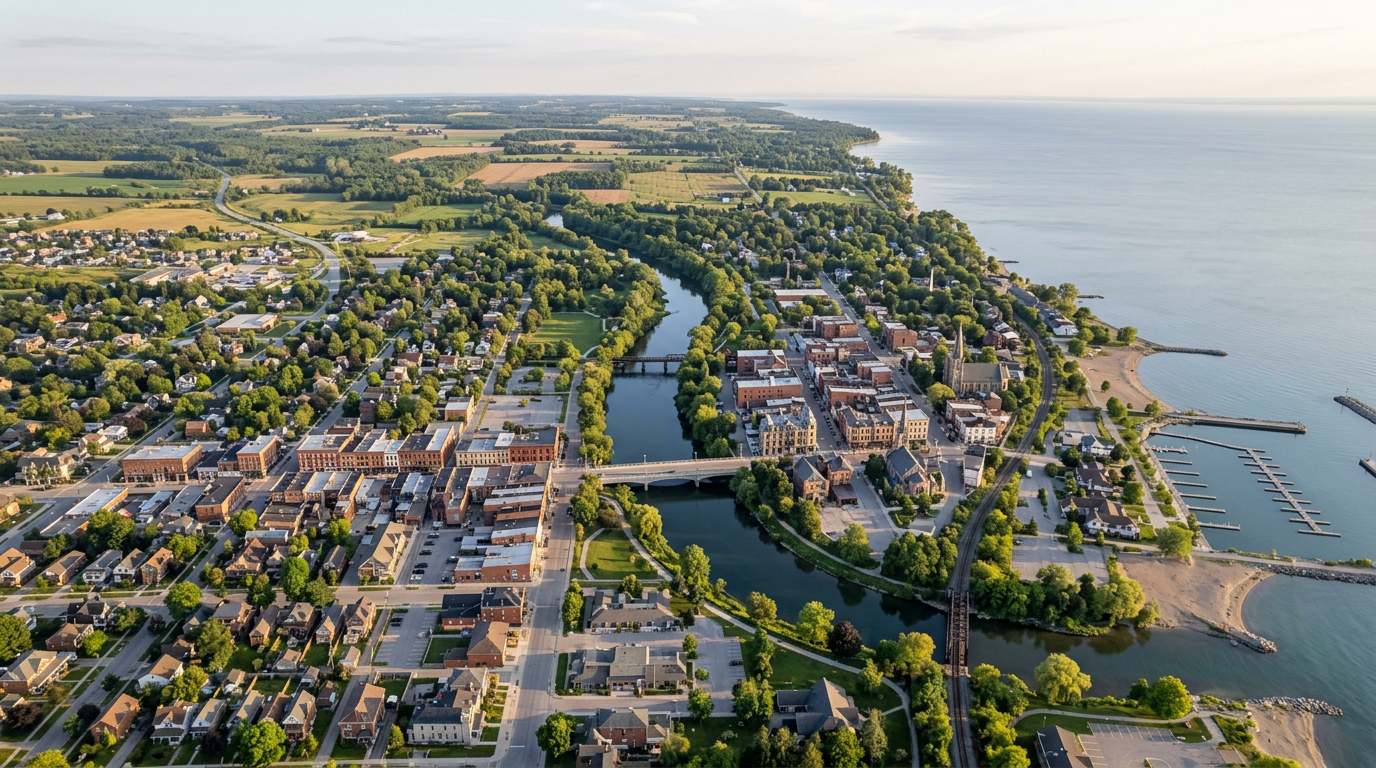
Port Hope
Port Hope sits on the north shore of Lake Ontario in the eastern Greater Toronto Area corridor, roughly an hour's drive from downtown Toronto. It functions as both a self-contained town and a practical home base for those who commute west by GO bus or by car along the 401. The harbor and lakefront shape much of daily life, with waterfront paths and open green space close to the town's center, and the surrounding landscape of rolling farmland and wooded hills gives the area plenty of room to explore.